Annuals vs Perennials
If you’re new to gardening, the words annuals and perennials can sound a little technical — but they’re really just about how long a plant lives and what you can expect from it year to year. Once you understand the life cycle of each, planning your garden gets way easier (and honestly, way more fun).
Annuals are plants that live for one growing season. They sprout, grow, bloom, set seed, and then they’re done when frost hits. The upside? They usually bloom their hearts out all summer and can give you big, bold color right away. The downside? You’re replanting them every single year. They’re perfect if you want quick impact, a pop of color in containers, or something showy to brighten up your front steps.
Perennials, on the other hand, are the “come back and visit me next year” plants. They live for multiple years, and even though they die back in winter, their roots stay alive underground and return when the weather warms up. Some perennials focus on roots the first year and don’t look like much until year two — but once they’re established, they’re reliable, low-maintenance, and they build a garden that gets better with time.
I’ll be honest: I’m a perennial girl through and through. I don’t do annuals unless I have a small spot open to fill. I only plant perennials because they can come back year after year, and I love the way a garden matures and gets fuller as the seasons pass. Over time, you’re not starting from scratch — you’re layering onto something that already has a beautiful foundation.
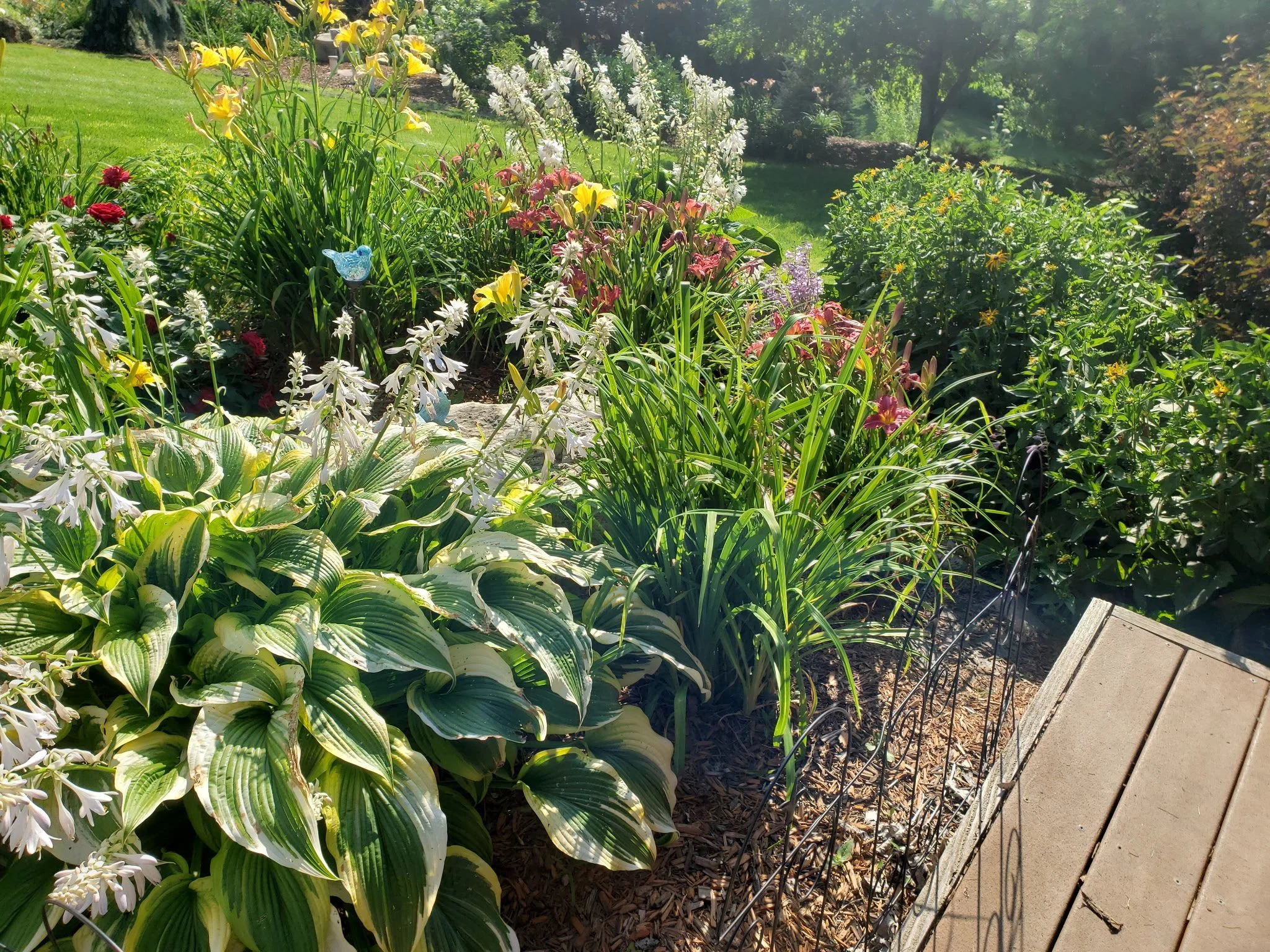
Coulee Region Gardening (My Curated Garden from my Last Home)
Now here’s the part that matters most to me: I want every section of my garden to have something blooming. I have finally cracked the code to have something blooming the entire spring until fall, and that’s really the secret to a garden that always looks full and cared for — even when you’re not out there fussing with it every day. The trick is choosing perennials with staggered bloom times: early spring bloomers, mid-summer workhorses, and late-season stars that carry you right into fall.
So if you’re standing in the garden center wondering what to pick, here’s my simple way to think about it: use perennials to build your “forever garden” structure — the plants that come back, fill in, and make everything feel established. Then, if you have a bare spot, a new bed you’re still building, or a little area that needs extra color, that’s when annuals can be a helpful finishing touch. Start with the plants that return, and everything else becomes optional.
One thing I pay attention to when I’m choosing perennials is how they behave over time. Some perennials stay politely in their lane (clumping types), and others will spread and fill space (creeping or self-seeding types). Neither is “bad” — you just want to know what you’re buying so your garden doesn’t feel chaotic two summers from now. I also think in layers: taller plants in the back, mid-height bloomers in the middle, and low growers along the edges to keep beds looking tidy. Then I repeat plants in small groups instead of doing “one of everything,” because repetition is what makes a garden look intentional and full, not like a plant sample sale.
And if you want that always-in-bloom look from spring through fall, it’s really about planning your bloom calendar and mixing in a few “support players.” I pick a handful of perennials that bloom early, a set that carries the middle of summer, and a few that hit late — but I also make sure I’m including plants with long-lasting foliage or interesting texture so the garden still looks beautiful when something isn’t flowering. Deadheading can stretch bloom time for certain perennials, and cutting some plants back after their first flush can even encourage a second round later in the season. That’s how you get that steady, full, layered look without constantly replanting — you’re working with the life cycle of the plants instead of fighting it.
- Kim in the Garden
