Gardening in the Winter
Winter gardening in Central Wisconsin looks a little different than what you see online — it’s not about planting in January, it’s about protecting what you already built and setting your garden up to explode in spring. For me, winter is the season of maintenance and prevention. It’s the quiet work that makes everything look effortless later, especially when you’re dealing with evergreens, snow, wind, and the never-ending layer of “stuff” that blows into your beds.
The first thing I do every spring (and sometimes on those warmer winter days when I can get outside) is clear all debris that comes in from winter. Here in Central Wisconsin we have a lot of pine needles that end up in the flower garden and if you don't remove them they can kill a lot of my perennials. People underestimate how quickly those needles can mat down — they don’t just sit there looking messy, they create a thick blanket that blocks sunlight and traps moisture right against the crown of the plant.
Evergreens are beautiful, but they definitely change what happens in your garden beds. Pine needles and evergreen litter break down slowly, and while they’re decomposing they can shift the soil environment over time. You’ll hear a lot of talk about pine needles “making soil acidic,” and while it’s not as dramatic as people think, the bigger issue is what they do physically: they form a dense layer, shed water differently, and can keep the soil underneath cold and wet longer into spring. That combination is rough on perennials that want airflow around their base, especially the ones that hate sitting in soggy, compacted conditions.
And because my soil is sandy, I pay even closer attention. Sandy soil drains fast, which is a blessing in a wet spring — but it also means it doesn’t hold nutrients as well, and it can swing between too dry and too wet depending on what’s sitting on top of it. When pine needles pile up, they can create a “roof” that sheds water away from the root zone in some spots, while trapping moisture in others. So you get weird little microclimates right in the same bed: one plant is staying too damp at the crown, another plant is drying out underneath a needle mat that’s preventing water from soaking in evenly. That unevenness is where you start seeing perennials struggle, thin out, or just not come back as strong.
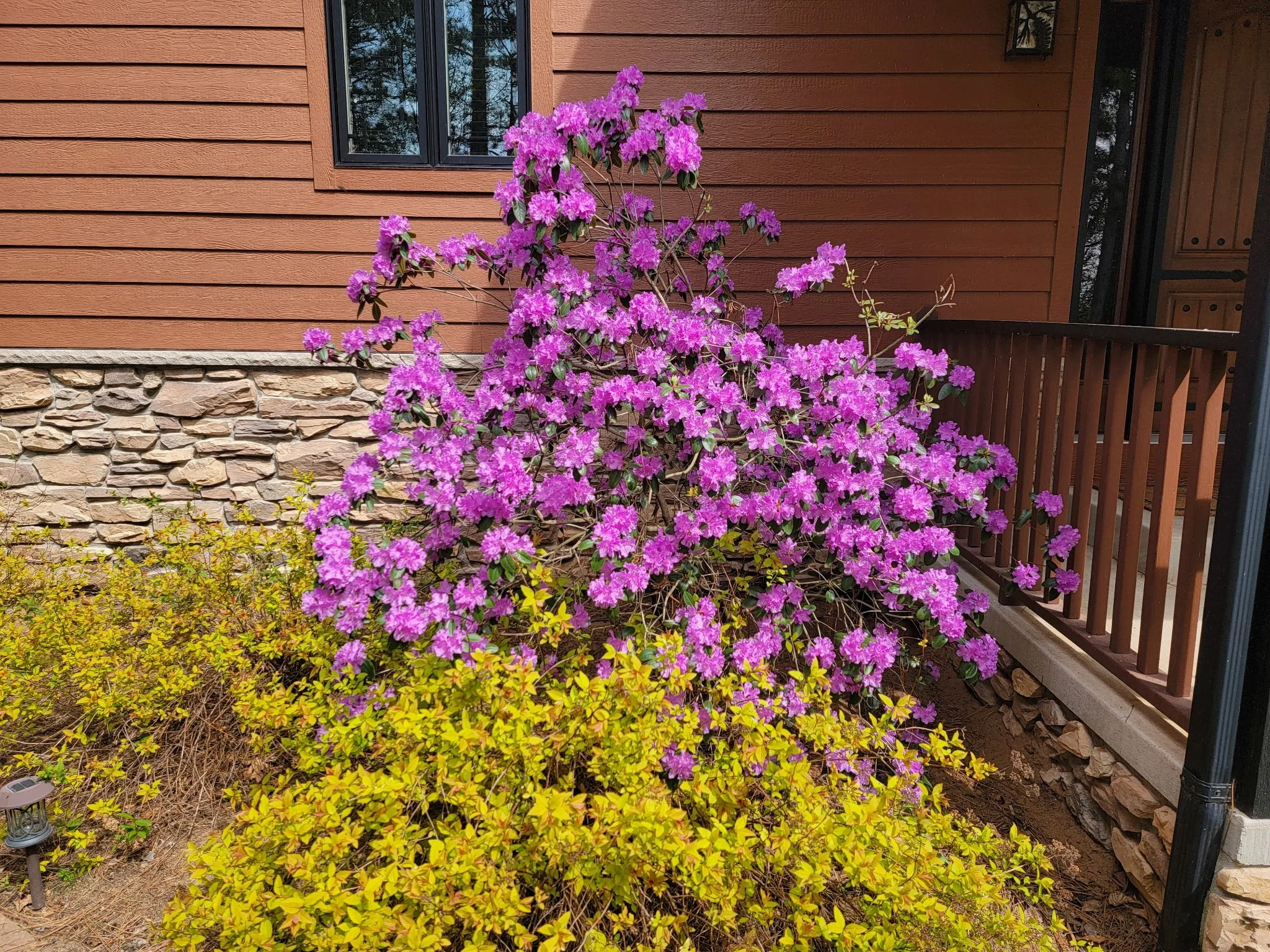
Note* the sandy soil in the bottom left of the photograph (My Home Garden)
Another thing evergreens do is compete — not always in an obvious way, but in a very real way. Their roots can be thirsty, and if you have beds near pines or spruces, you’ll notice the plants closest to them can look stressed sooner in summer. In winter, that evergreen canopy also changes snow cover. Some areas get insulated by snow, and others get wind-scoured and exposed. Perennials that would normally be protected can end up dealing with freeze-thaw cycles, which is hard on the roots and crowns. That’s why my “winter gardening” mindset is really about controlling what I can control: debris, airflow, and consistency.
So here’s what I actually do. I rake or gently lift pine needles out of beds as soon as I can, especially around the base of perennials — I want the crown visible and breathing. If needles are tangled into a groundcover, I loosen them with my hands instead of ripping, because I’m not trying to damage what’s already established. Then I check for any spots where debris has created a thick mat and I thin it out. Think of it like brushing out hair: you’re not trying to strip everything bare, you’re just preventing that suffocating layer from forming.
Once things are cleaned up, I top-dress strategically. With sandy soil, I love adding compost in spring because it helps hold moisture and nutrients, and it gives my perennials a stronger start. If I’m mulching, I keep mulch a few inches away from plant crowns — same concept as the pine needles — because air circulation is everything. And if a bed is right under evergreens, I’m extra intentional about plant choices: tougher, more forgiving perennials go there, and the divas get the better real estate.
Winter can feel like a dead season, but it’s honestly when a lot of garden success gets decided. In Central Wisconsin, the evergreens aren’t going anywhere — so instead of fighting them, I manage what they drop, how it sits, and how it affects my soil. The payoff is huge: healthier perennials, fewer losses after a rough winter, and beds that wake up fast and full when spring finally decides to show up.
-Kim In the Garden
